4.09
How to clean a Wolf induction stovetop: glass, spills, touch controls and what to avoid
Care for the glass top of a Wolf induction cooktop or range: the after-cooking wipe, Ceran cream, the razor scraper for melted spills, water on the touch controls, products to avoid and when to call for repair.
- Category
- Maintenance
- Equipment
- Cooktop · Range
To clean a Wolf induction stovetop, wait until the glass is cool, wipe it with a damp microfiber cloth, then spread a small dab of non-abrasive Ceran cooktop cream over the surface and buff it dry with a clean towel. Anything that melts onto the glass while you cook, such as sugar syrup or a stray plastic bag, should come off at once with the razor blade scraper supplied with the cooktop. A model number beginning with IR marks a Wolf induction range, and its glass top takes exactly the same care as a built-in induction cooktop.
4.9.1 A routine for the glass after cooking
Induction heats the pan rather than the glass, yet the glass still soaks up warmth from hot cookware, so give it a few minutes first. Then:
- Sweep loose crumbs off with a dry cloth so they cannot scratch as you wipe.
- Wipe the whole top with a cloth wrung out in warm water and a drop of dish soap.
- Spread a pea-sized amount of Ceran cream in small circles and let it haze briefly.
- Buff with a dry microfiber towel until every streak is gone.
If you cook every day, give the glass the full cream treatment once or twice a week; in lighter weeks the soapy wipe is plenty. A stainless frame around the glass needs only a damp cloth, moved with the grain.
4.9.2 Sugar, melted plastic and baked-on spots
Timing decides how you treat a spill. Jam, caramel, sugary glazes and melted plastic should be lifted while the surface is still hot, because they can bond to the glass and pit it as they cool. Switch the zone off, slide the pan aside, put on an oven mitt and push the mess toward a cool part of the top with the scraper held almost flat.
Ordinary cooked-on food is the opposite case. Let it cool, cover it with a warm wet cloth for a few minutes, then scrape gently and finish with cream. A nicked or tilted blade is what leaves scratches, so replace the blade when it dulls.
4.9.3 White rings, rainbow sheen and grey streaks
Pasta water that boils over dries into chalky white rings. Those are minerals, and a cloth dampened with diluted white vinegar dissolves them; rinse and dry afterward. A rainbow sheen usually comes from overheated oil or the underside of a pan that was not clean, and the cream polishes it out with patience. Metallic grey streaks are often traces left by sliding an aluminum or copper pan, and they rub away too. A mark you can catch with a fingernail is a scratch, and no cleaner removes it.
4.9.4 Keeping water off the touch controls
The touch controls sit under the same sheet of glass, so a wet rag or a pot resting on them can confuse the electronics. On a Wolf induction cooktop, error 3 or a continuous tone means water or cookware is sitting over the control area. Take it away, dry that strip, and the alert normally clears. When it does not, turn the cooktop’s breaker off for 30 seconds, restore power and retest. Clean the control area last with a barely damp cloth, and spray any product onto the cloth rather than onto the glass.
4.9.5 Products and habits that harm the glass
Steel wool, green scouring pads, powdered cleansers and chlorine bleach scratch or etch ceramic glass. Ammonia window sprays leave a film that bakes into streaks. Also avoid dragging cast iron across the top, resting cutting boards on it, and setting heavy items down hard; a sharp knock near an edge can crack it. Keep the cabinet space below clear as well: induction electronics are cooled by a fan, and a blocked air path can make a cooktop cut out mid-cook.
4.9.6 Gas cooktops and rangetops: grates, knobs and igniters
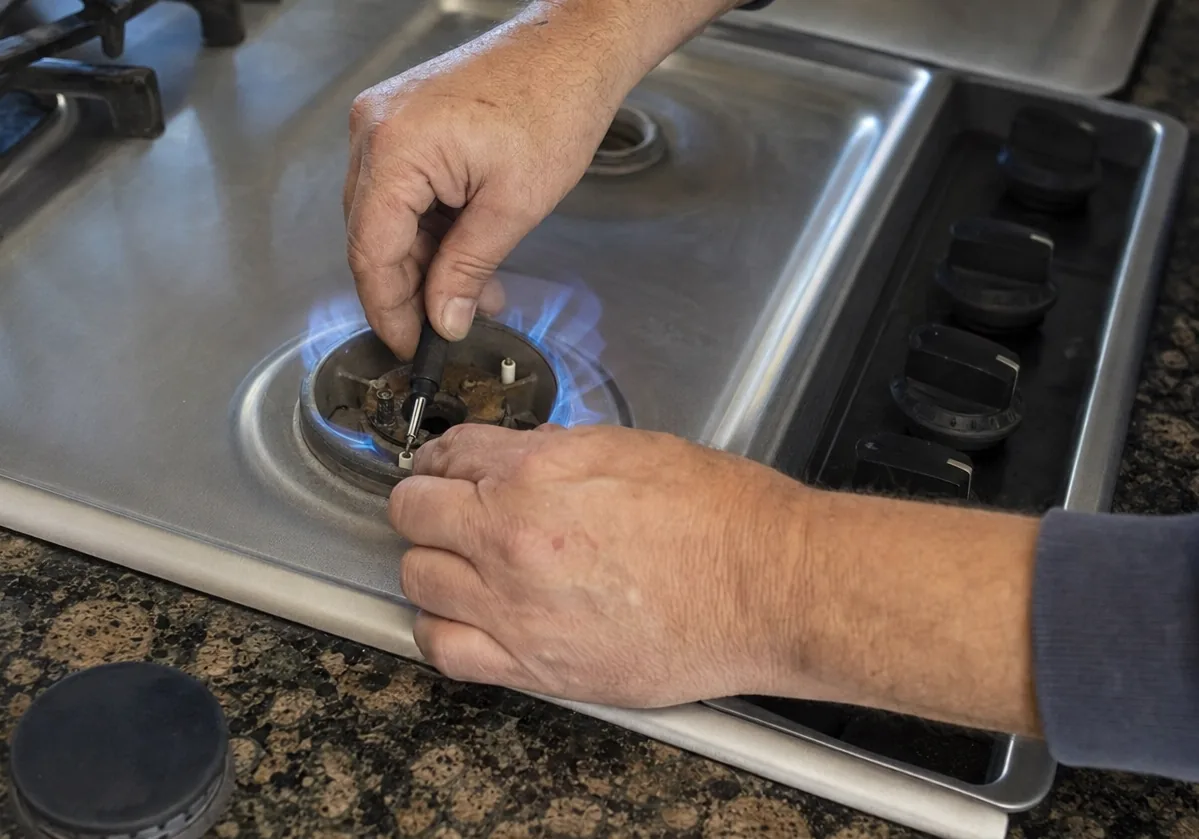
If your Wolf cooktop or SRT rangetop burns gas instead, the routine shifts. Carry the grates to the sink and scrub them under hot water with mild detergent, or a baking soda paste on burnt patches, without submerging them in a full basin. Knobs get a damp cloth only, never a soak or a machine wash. A crusted igniter brushes clean with a soft toothbrush, but a cracked, broken or loose one needs repair. On a DF dual fuel range, hold Lock for 3 seconds before wiping the control panel, and put the degreaser on your cloth. The longer schedule is in our Wolf range maintenance entry.
4.9.7 When cleaning is not the answer
A crack or chip in the glass, touch controls that stay dead after the top is dry and the breaker has been reset, or a zone that shuts off partway through a meal all call for a repair. Stop using a cracked top, since a spill can seep down to the electronics. Twenty Mile Range Co. looks at these faults in kitchens across Nocatee and St. Johns County, starting with an $80 diagnostic visit. A new control board or touch panel usually lands in the $460–$1,070 range, and you get the exact price after the diagnosis.
What does the repair behind this note cost?
$80 flat to come out and find the fault, credited in full against the repair when you approve it. Beyond that, the work below is what these jobs run to once parts and labour are counted — $80 at the low end, $1,070 at the top of the widest band on this page.
| No. | Work | Completed, parts and labour |
|---|---|---|
| 4.09.6.01 | Flat diagnostic fee | $80 |
| 4.09.6.02 | Burner valve or orifice service | $230–$660 |
| 4.09.6.03 | Igniter or spark module replacement | $190–$550 |
| 4.09.6.04 | Oven thermostat or temperature sensor | $180–$520 |
| 4.09.6.05 | Control board or touch panel | $460–$1,070 |
A range, because the firm figure is written down after the diagnosis and not before it. The band a job lands in depends on which part failed, whether the appliance has to come out of the cabinetry to reach it, and what the part costs the week it is ordered. A written estimate is provided before any repair begins. No work starts without your approval.
Questions this note answers
- Can I use glass cleaner or vinegar on a Wolf induction cooktop?
- Diluted white vinegar is fine for dissolving the chalky rings left by water that boiled over, as long as you rinse it off and buff the glass dry. Ammonia window sprays are a poor choice: they leave a film that turns into streaks once the glass warms up, and they do nothing for cooked-on food. For regular care, a non-abrasive ceramic cooktop cream works better than either.
- How do I get burnt-on food off a Wolf induction glass top?
- Let the glass cool, lay a warm wet cloth over the spot for a few minutes to soften it, then push the residue off with the razor scraper held nearly flat and finish with Ceran cream. Sugar and melted plastic are the exception: scrape those away while the surface is still hot, wearing an oven mitt, before they harden onto the glass.
- Why does my Wolf induction cooktop beep while I am wiping it?
- A steady tone or an error 3 usually means the touch controls have sensed water, a wet cloth or a pan sitting over them. Lift it away, dry that strip of glass, and the warning should stop. If it keeps sounding, switch the cooktop's breaker off for 30 seconds, turn it back on and test again before booking a technician.
Cross-index
4.09.8.1Repair entries
- 2.01Wolf oven not heating, or driftingWall oven, Range
- 2.02Wolf burner clicks, no flameRange, Rangetop, Cooktop
- 2.03Wolf induction drops outCooktop, Range
4.09.8.2Other reference entries
- 4.03Maintenance calendarMaintenance
- 4.05Parts and lead timesParts
- 4.06GlossaryGlossary
- 4.07Self-cleanMaintenance
- 4.08Range careMaintenance